
Business Page from Shelby30…
Hot Air Balloons
Hopp in, look up, soar away…

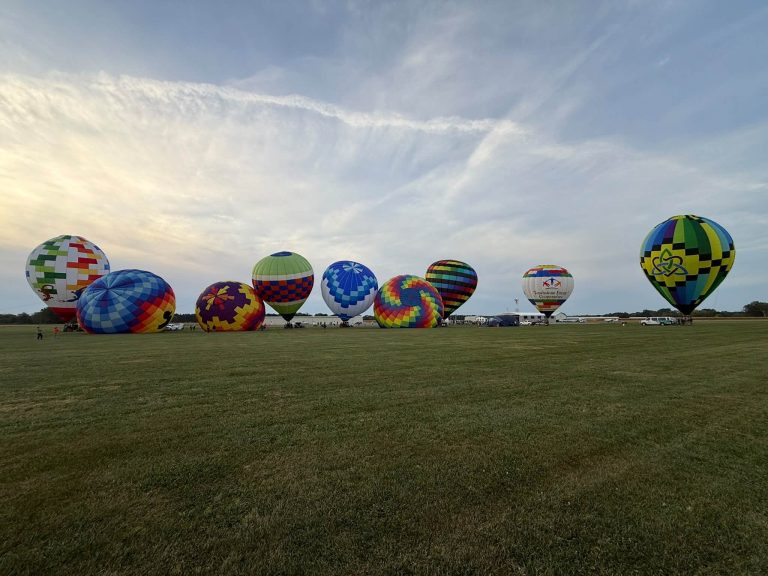

Drift, dream, and discover with Hoppin’ Around.
Hoppin’ Around
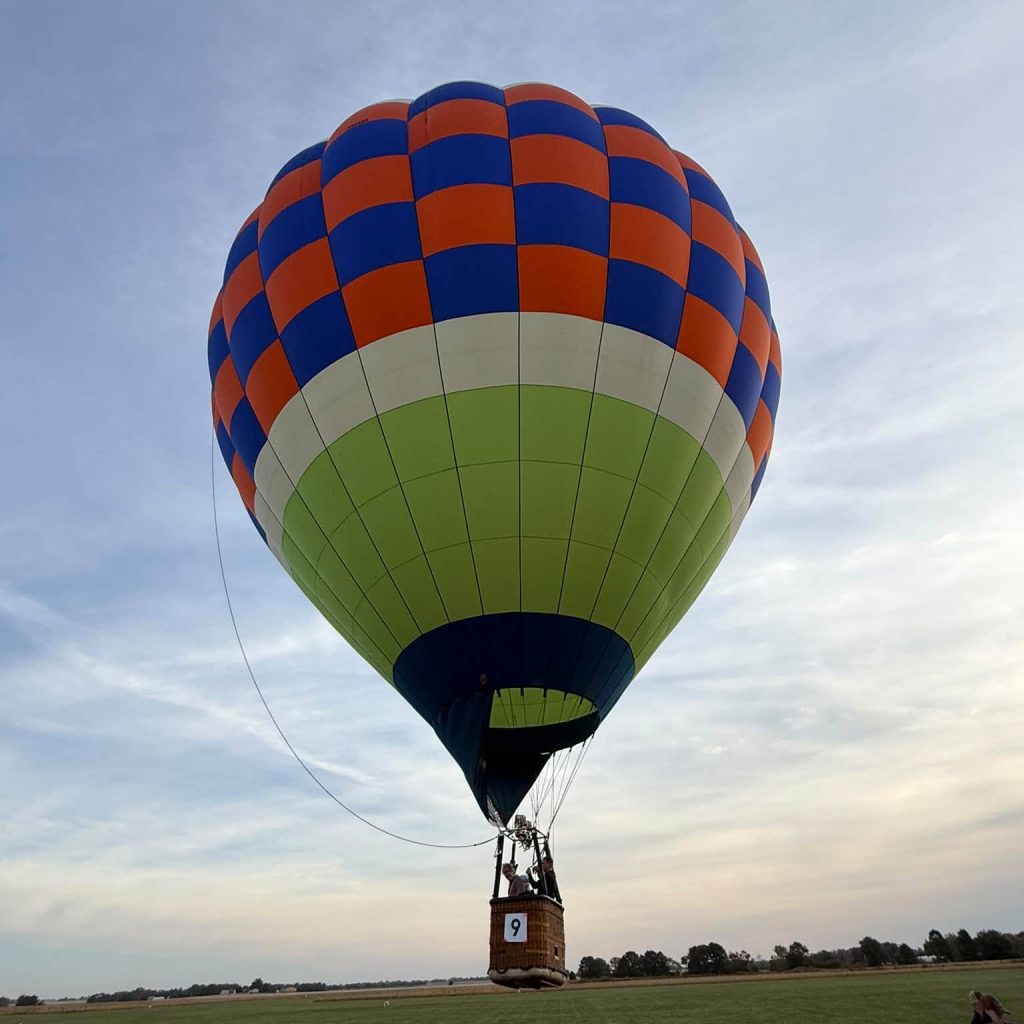
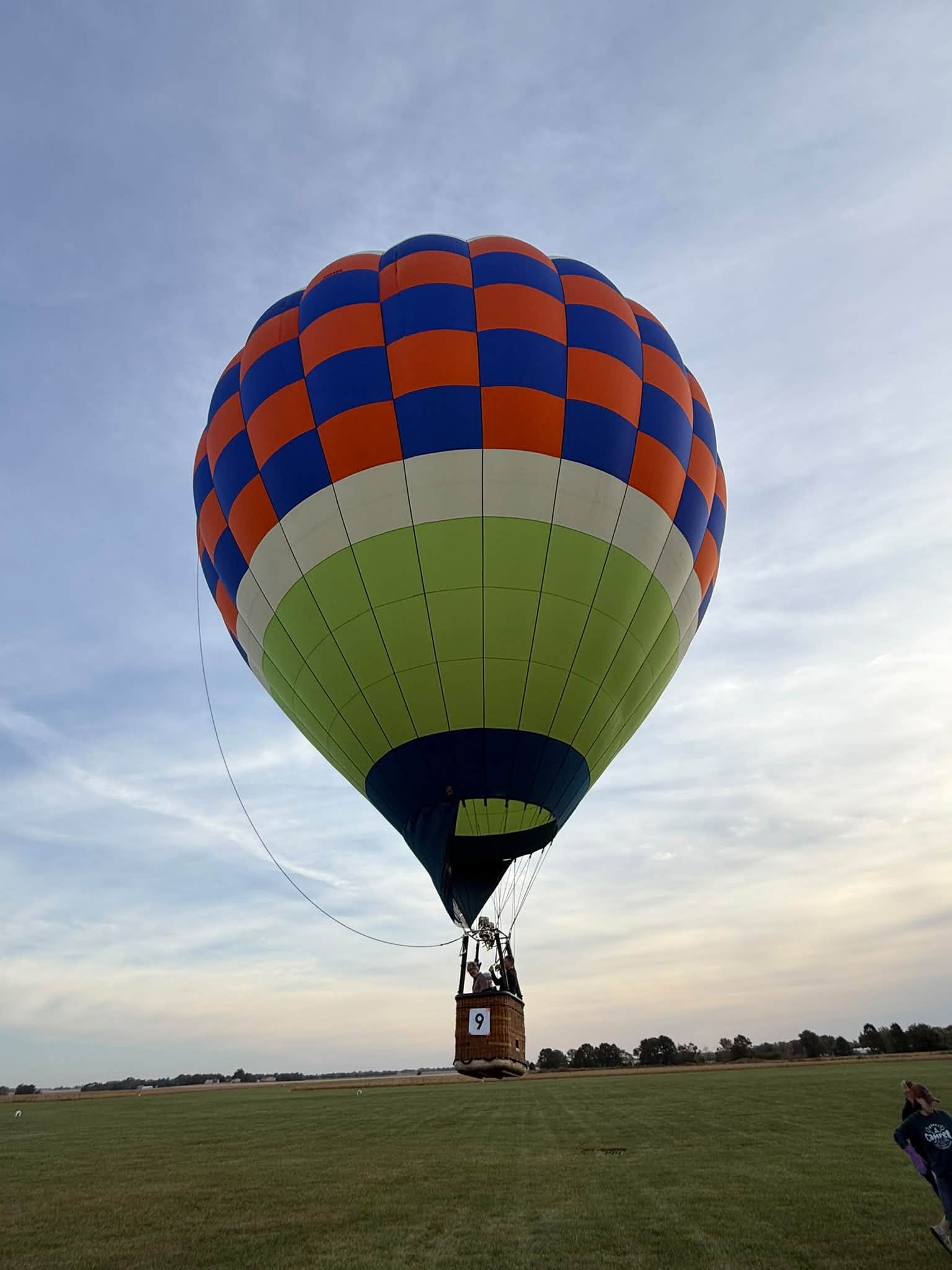
Floating above the landscape in a hot air balloon is a uniquely magical experience, and taking to the skies with pilot Austin Hopp aboard his vibrant balloon, Hoppin’ Around, makes it truly unforgettable.
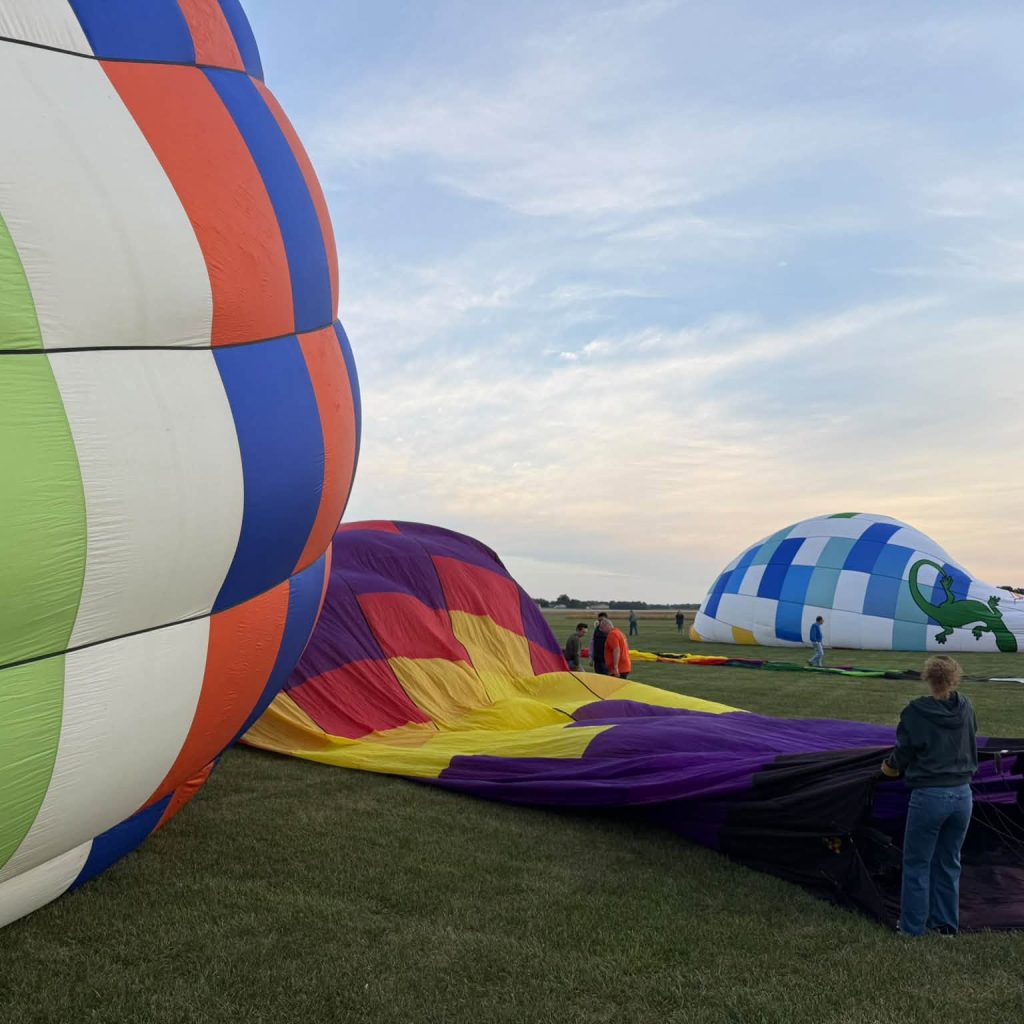
From the moment the giant canvas spreads across the launch field to the serene drift high above the treetops, Austin transforms a simple flight into an immersive, awe-inspiring journey through the air.
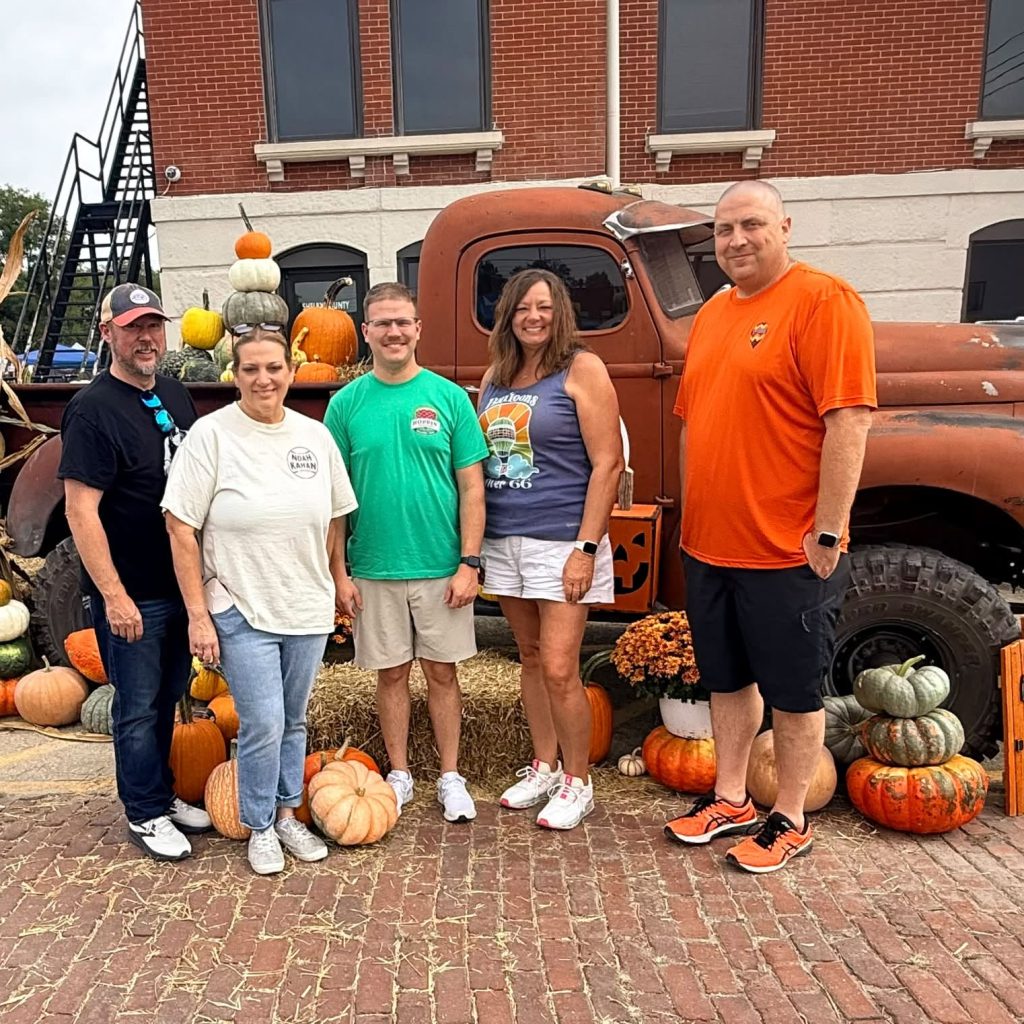
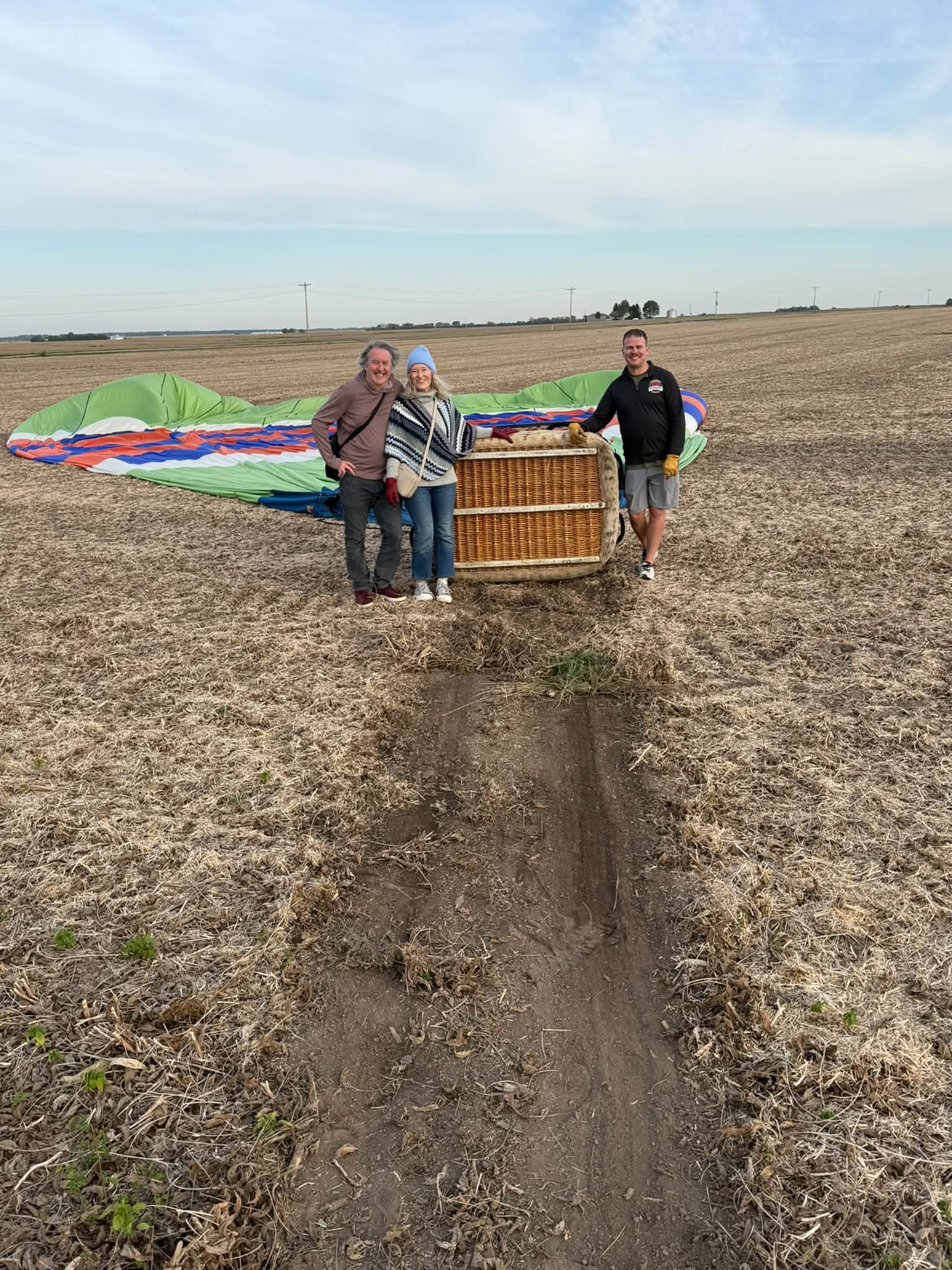
From Left to Right: Tracy, Annette, Austin(pilot), Sara, Chad(pilot)
Hoppin’ Around
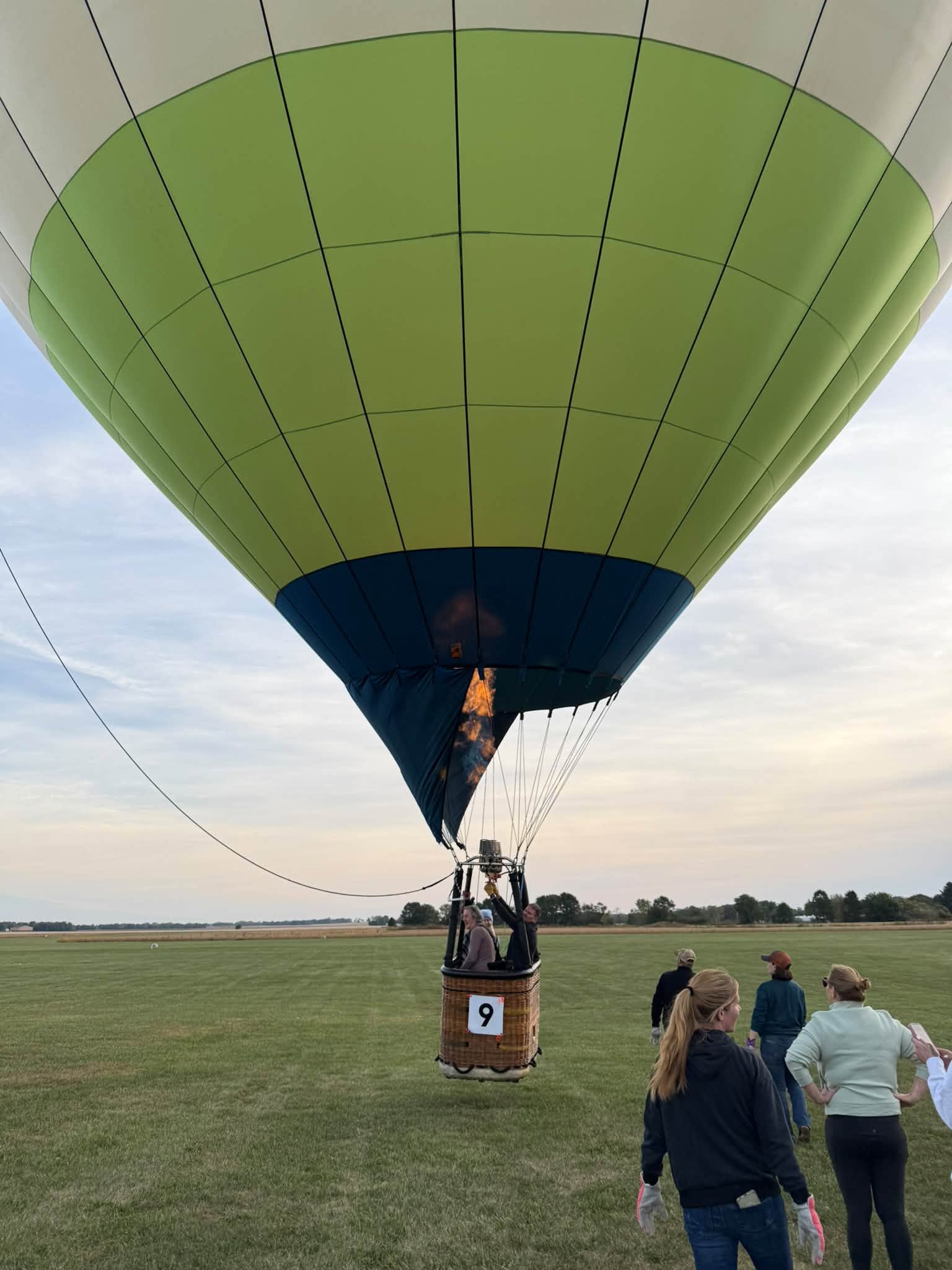
Austin Hopp brings a deep passion, calm expertise, and genuine warmth to the art of ballooning. Before the burners ever roar, he guides passengers through the fascinating mechanics of flight, checking wind conditions and meticulously preparing Hoppin’ Around for takeoff.
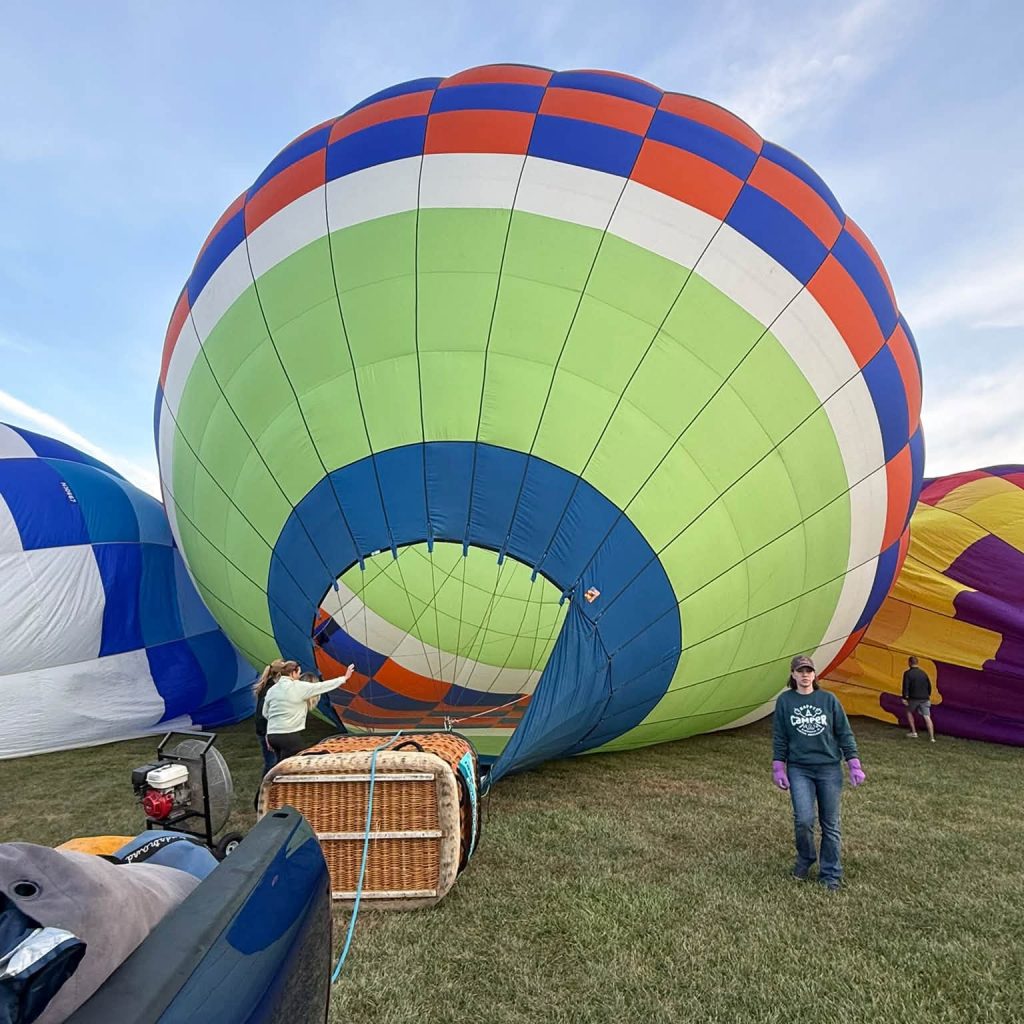
His practiced precision instantly puts passengers at ease, turning pre-flight jitters into pure anticipation as the balloon gently fills with hot air and rises into position.
Hoppin' Around
Pure magic in motion.
Hoppin’ Around
There is a distinct kind of magic that begins the exact instant the basket lifts off the grass. Unlike airplanes or helicopters, hot air ballooning involves no sudden jolts or roaring engines while cruising—just a smooth, almost weightless ascension into the sky.
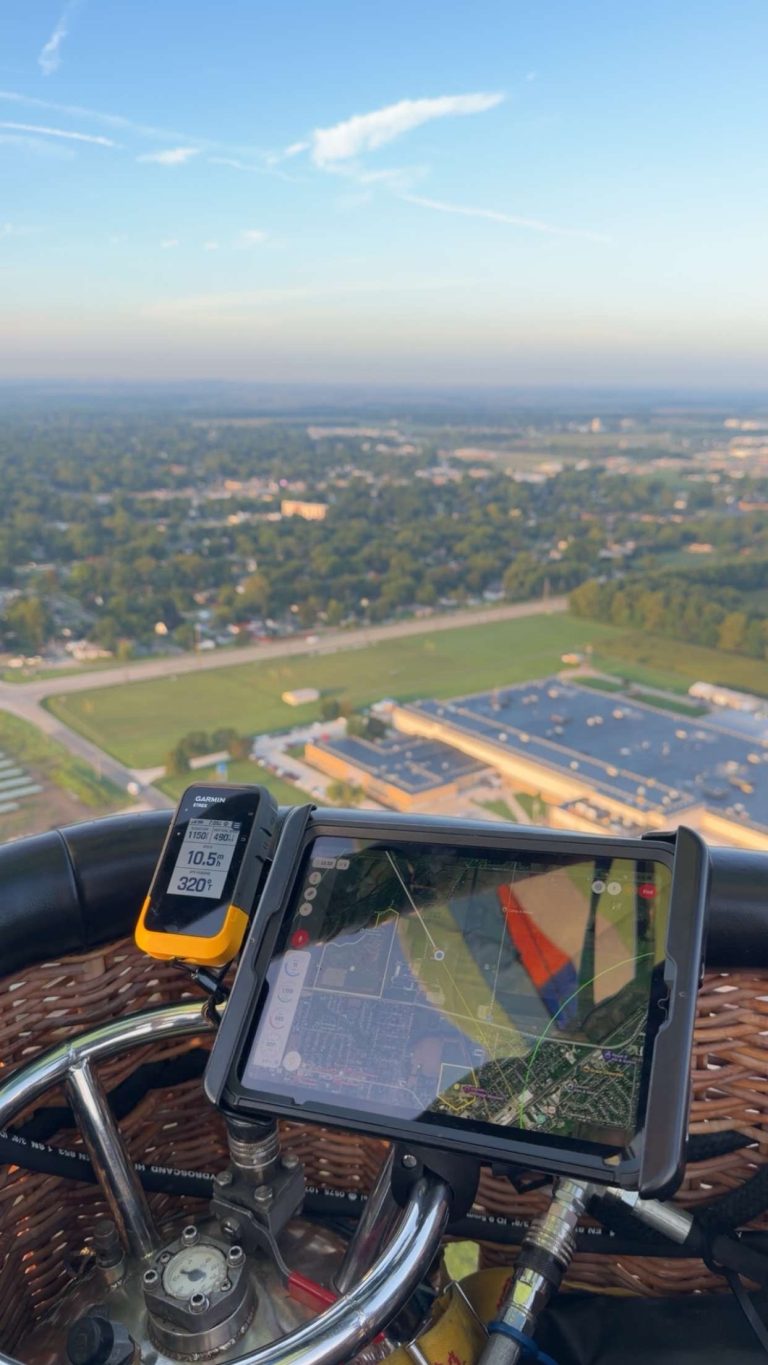
Standing in the basket as the world below shrinks into a breathtaking tapestry of fields, winding roads, and distant horizons is a feeling unlike anything else on Earth.
Hoppin’ Around
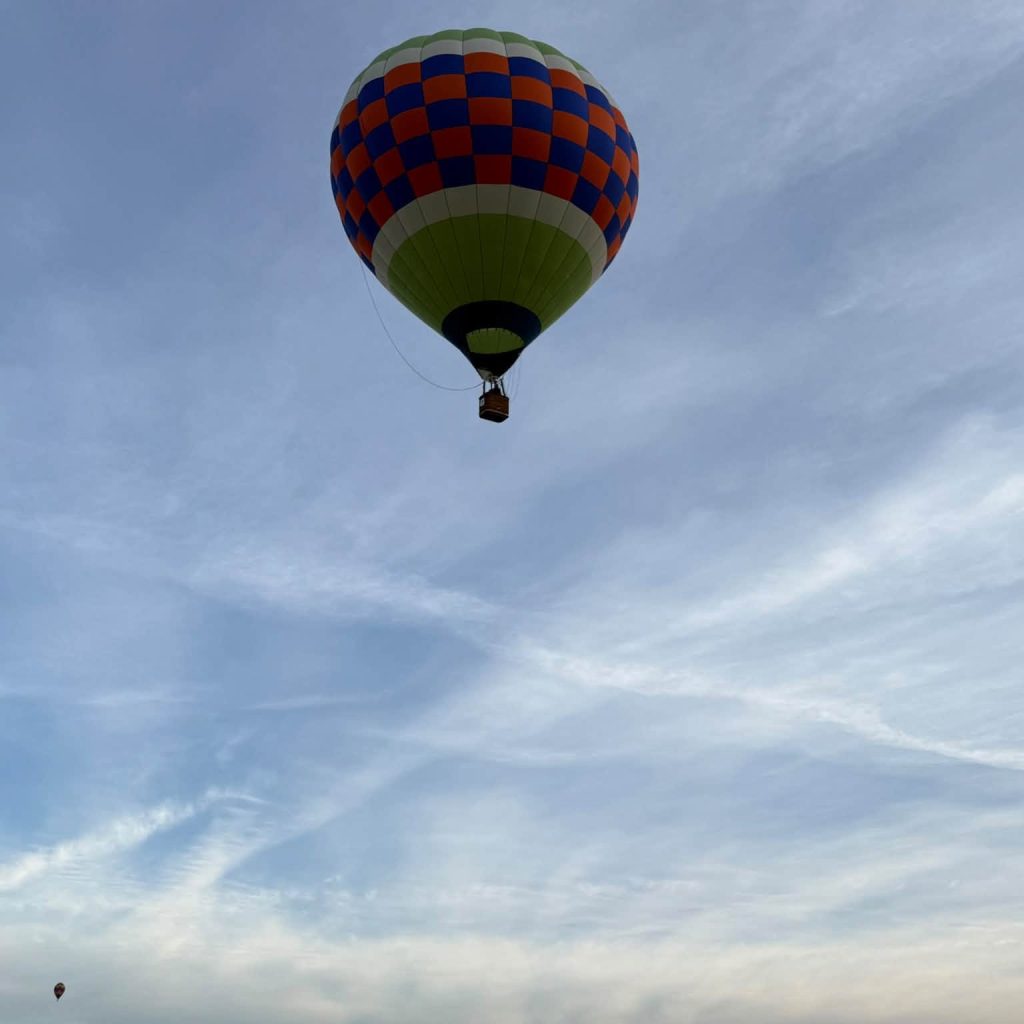
Drifting aboard Hoppin’ Around offers a rare perspective on the world below.
Austin skillfully navigates different wind currents to glide at varying altitudes, sometimes skimming just above the tree line where you can hear the rustle of leaves, and other times soaring high into the clouds for sweeping panorama views. Up here, away from the hustle of everyday life, time seems to slow down completely.
Hoppin’ Around
The silence of ballooning is perhaps its most enchanting feature. Between the occasional, satisfying blasts of the burner that keep the envelope buoyant, the sky is completely still.
Floating quietly through the open air allows passengers to hear distant sounds from the ground—birds chirping, water rippling, or quiet breezes—creating a peaceful, almost dreamlike atmosphere that stays with you long after landing.
Hoppin’ Around
Austin’s role as pilot extends far beyond steering the balloon; he acts as an engaging guide to the sky. With Hoppin’ Around as his mobile vantage point, he points out local landmarks, explains how subtle shifts in air temperature dictate the route, and shares lighthearted stories from his years in aviation.
His enthusiasm for the craft is contagious, making every passenger feel like an active part of a great adventure.
Hoppin’ Around
Every flight in Hoppin’ Around is entirely unique, shaped by the gentle whims of the morning or evening wind. Because a balloon travels wherever the atmosphere carries it, no two journeys ever follow the same path or land in the exact same spot.
This element of gentle unpredictability adds a touch of old-world exploration and wonder to the entire voyage.
Touchdown brings a celebrated tradition that perfectly caps off the experience. As Austin brings Hoppin’ Around back to solid ground with a gentle landing, passengers are welcomed back by the chase crew and treated to the traditional balloonist’s toast—a centuries-old ritual celebrating a safe flight and the timeless magic of human flight. Soaring with Austin isn’t just a ride; it’s a memory etched high in the sky.

Sarah M.
William V..
Freddie F.
Is Ballooning Safe
Yes! Ballooning is heavily regulated by the FAA just as any other aircraft like airplanes and helicopters. Safety is the highest priority of the pilot, crew, and FAA.
Pilots must go through training both hands on and studying rules and regulations, and must take a written, oral, and practical exam. Pilots have to have a flight review from a flight instructor every 2 years to ensure they still possess the knowledge and skill to safely fly.
The balloon must be maintained in airworthy condition and is visually inspected before every flight. If anything appears wrong it must be fixed before flight if possible or the flight will be cancelled. The balloon is also required to be inspected by an FAA certified repairman after every 100 hours of flight time or annually, whichever comes first. If anything does not pass inspection it must be repaired before it is certified as airworthy again. Certain parts such as fuel hoses are required to be replaced at regular intervals.
What Kind of Fuel is used ?
Hot air balloons use the same propane fuel you use for your gas grill or to heat your home. But, we use specialized tanks that supply the liquid propane from the bottom of the tank directly to the burners. Your gas grill and home heating use the propane vapor from the top of the tank. Our burners have a system that superheats the liquid propane and rapidly vaporizes it before it is ignited and produces 18 Million BTU (yes, you read that right). The temperature inside of a hot air balloon is usually kept between 200 and 250 degrees Fahrenheit at the top.
The Weather Looks perfect but the balloon doesn't fly? why?
Balloons can only fly in very limited limit conditions.
-Generally wind speeds should be 3-10 MPH. If the wind too slow to move us, we cannot make it to a landing site. If the wind is too fast, it increases our risk of having too rough of a landing or hitting dangerous objects like trees or powerlines when we land.
-Balloons can only fly close to sunrise and sunset. In the middle of the day, the heating from the sun causes unstable winds and is dangerous to balloons.
-Any rain in the area, or thunderstorms even as far as 100 miles away can cause unstable winds, even if the sky is clear directly overhead. Moisture also degrades our fabric, so pilots do their best to keep the balloon from getting wet.
-Balloons can only fly in Visual Flight Rule (VFR) conditions. The FAA defines VFR conditions as 1-3 miles of visibility (distance depends on type of airspace), and staying a certain distance away from the clouds. Additionally, balloons can only land in the daylight so we can see our landing sites, so no flying when it is dark.
-Sometimes we choose not to fly because it is too hot! Heat can be dangerous to the crew, and it reduces our weight capacity. Cold, however, is not an issue, but there are additional things we have to do in cold weather. In cold weather we have to dress extra warm, and it reduces the pressure in our fuel tanks. We sometimes have to preheat our fuel tanks to ensure there is enough pressure.
Where will the Balloon land?
Hot air balloons are moved by the wind. Our landing depends purely on where the wind takes us and where there is space! We can, however, try to plan our landing spot or area based on wind forecast. We then adjust our launch location to attempt to reach our preferred landing site, but it is not guaranteed.
A little bit of History...
The story of the Montgolfier brothers and the dawn of aviation in 18th-century France is a mix of accidental science, royal spectacle, and legendary diplomacy:
THE YEAR IS 1783….6 years before the French Revolution….
1. Sparks of Inspiration: The Montgolfier Brothers
Born into a wealthy family of paper manufacturers in Annonay, France, Joseph-Michel and Jacques-Étienne Montgolfier were an ideal combination of visionary and engineer. Legend has it that Joseph first observed laundry drying over a fire and noticed how pockets of fabric trapped rising smoke and billowed upward.
Believing that burning wood created a unique, buoyant gas (which they dubbed “Montgolfier Gas”), the brothers began constructing lightweight paper-and-fabric globes. They burned damp straw and wool underneath to fill the envelopes, unaware that the lift came simply from heating the surrounding air.
2. The First Test Flight: Barnyard Pioneers
By September 1783, the brothers had attracted the attention of King Louis XVI. To demonstrate their invention before the royal court at Versailles, they built a massive, beautifully decorated balloon named the Aérostat Réveillon.
Before risking human life, they needed to test if living creatures could survive high in the atmosphere. The crew selected three passengers:
A Sheep: Chosen as a stand-in for a human being due to its physiological similarity.
A Duck: Included to act as a scientific control, as ducks were natural fliers accustomed to high altitudes.
A Rooster: Added to test a ground-dwelling bird that could not fly high.
On September 19, 1783, in front of King Louis XVI, Marie Antoinette, and a crowd of 130,000 spectators, the balloon launched and drifted for about eight minutes, landing safely two miles away. The animals survived unscathed—except for the duck, whose wing was reportedly stepped on by the sheep during landing!
3. Rejecting Prisoners for Royalty
With the animal test a success, the King proposed sending convicted criminals or prisoners up for the first human voyage, offering them pardons if they survived.
However, two young French aristocrats—physicist Jean-François Pilâtre de Rozier and military officer François Laurent, the Marquis d’Arlandes—were outraged by the idea. They argued that the honor of being the first humans to conquer the skies belonged to nobility, not condemned felons. The King relented, and on November 21, 1783, Rozier and d’Arlandes lifted off from Paris, floating 5.5 miles across the city in a 25-minute flight—marking humanity’s very first untethered human flight.
4. Pitchforks & Champagne: The Origin of the Balloon Toast
As the two aristocrats drifted across the countryside, they realized a major problem: landing meant descending into the fields of terrified local peasants.
To the 18th-century French farmers, a giant, smoke-breathing, roaring dragon-like object falling out of the sky was terrifying. Expecting demonry or invader attacks, peasants rushed toward the landing site armed with pitchforks, axes, and scythes to destroy the monster.
To prove they were human aristocrats rather than supernatural creatures, Rozier and d’Arlandes brought along a bottle of fine French champagne. Upon landing, they offered the sparkling wine to the frightened farmers as a peace offering and a gesture of apology for landing in their crops. The celebratory drink disarmed the crowd, smoothed over the intrusion, and established a tradition that survives to this day: the post-flight champagne toast shared between pilots, crew, and passengers after every safe landing.
5. What Happened to the Montgolfier Brothers?
Following their historic breakthroughs, both brothers were honored by the French Academy of Sciences, and their father was elevated to the nobility by King Louis XVI.
Jacques-Étienne focused on expanding the family business and advancing industrial manufacturing, living until 1799.
Joseph-Michel continued inventing, later developing the hydraulic ram pump among other mechanical devices, and lived until 1810.
Though modern hot air balloons eventually transitioned to propane burners and synthetic nylon, the fundamental spirit of drifting above the world—and celebrating the landing with a bottle of champagne—remains unchanged from the Montgolfiers’ original flights.
Etienne Montgolfier:
Managed the family’s paper mill business and expanded its success, and that business is still thriving globally today as the world-famous fine art paper manufacturer Canson.
Here is how Etienne’s work laid the groundwork for the modern company:
The Vidalon Mill & Innovation: Etienne ran the family’s main paper mills at Vidalon in Annonay, France. He was an accomplished engineer who modernized French papermaking techniques—including adopting Dutch beaters and developing smooth vellum paper. In fact, the hot air balloon envelope itself was crafted directly from lightweight paper produced at their mill.
Royal Recognition: In 1784, King Louis XVI honored Etienne and the Montgolfier family for both their aviation breakthrough and their major contributions to the French papermaking industry by designating their facilities as a Manufacture Royale (Royal Manufactory).
The Transition to Canson: Following Etienne’s death in 1799, his daughter Alexandrine and her husband, Barthélémy Barou de la Lombardière de Canson, took over the management of the mills. They officially rebranded the firm as Montgolfier & Canson (which later became Canson).
The Modern Legacy: Today, Canson is one of the premier fine art paper brands in the world, widely recognized for its watercolor, sketching, and photographic papers. If you look at Canson’s official logo today, it still features a stylized hot air balloon floating above a shield—a direct tribute to Etienne, Joseph, and the family’s dual legacy in paper and flight.
Contact Us
Austin Hopp is based out of Lincoln, Illinois, where he acts as a local balloon pilot and Balloon Meister for regional festivals (such as Lincoln’s Balloons Over 66).
Because independent regional balloon pilots typically schedule flights directly around festival appearances or private arrangements, there is no separate standalone public website listing direct office contact info for Hoppin’ Around.
The best ways to connect with Austin for flight inquiries, upcoming appearances, or booking information include:
Regional Festival Pilot Roster Directories
Austin frequently flies in central Illinois events—including the Lake Shelbyville Balloon Fest, Balloons Over 66 (Lincoln, IL), Centralia Balloon Fest, and the Galesburg Great Balloon Race. Official flight bookings or ride requests for festival weekends are typically routed through the respective festival organizing committees or their official pilot coordinators.
Social Media & Event Pages
Event organizers and local community flight networks frequently share pilot contact updates and ride availability ahead of major rallies via festival Facebook pages (e.g., Balloons Over 66 Weekend or Lake Shelbyville Balloon Fest).
Direct Pilot Outreach
If you need to reach out to Austin regarding photos, crew opportunities, or future passenger flights, local balloon event organizers or pilot briefing contacts at host venues (such as the Shelby County Airport during festival weekends) can pass along direct messages to his crew.
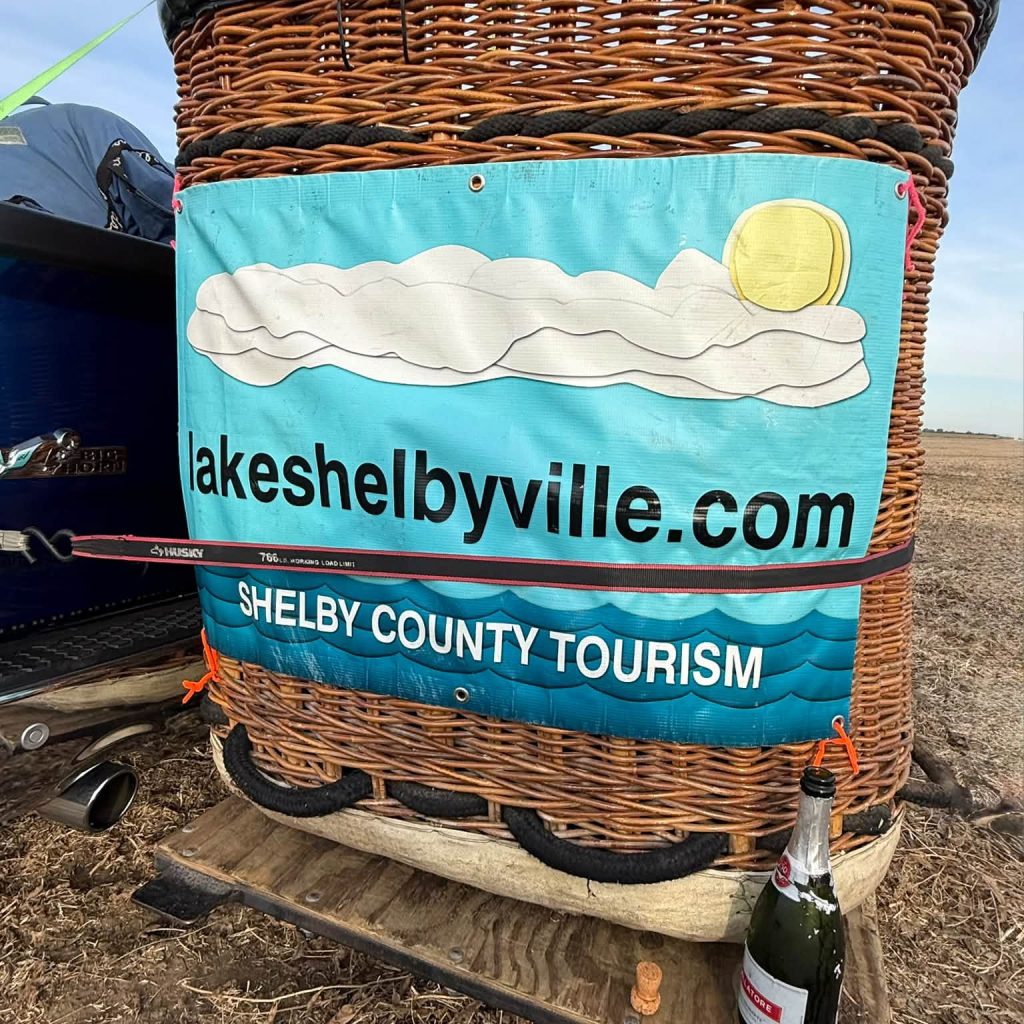
A big thank you!
…to the wonderful people (Freddie and Darla) at the ShelbyCounty Tourism office for sponsoring the flight and their hard work in arranging the dinner and breakfasts during the 3 days of the festival.
Also big thanks to Kevin at the shelby-electric co-op for organizing and arranging this outstanding event…. until next year!!

 How to create new field